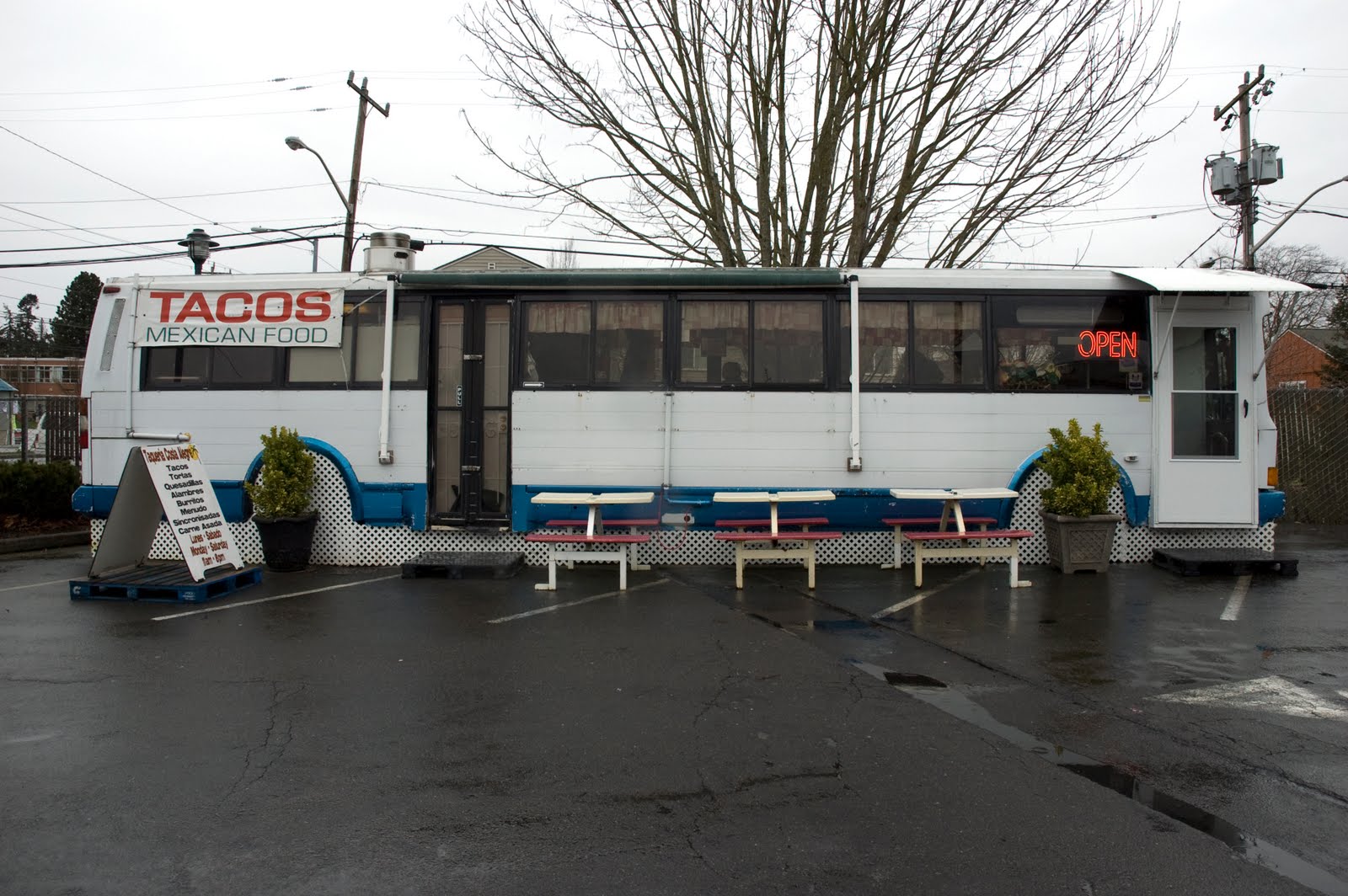
Guess who *finally* built up the courage to face her thesis again. This girl. Check out the photo documentation on my flickr page. I didn't crop most of them, but otherwise they're edited and ready for public viewing. Now I need to update my other blog, Taquerías de Seattle. ¡Besos!
Showing posts with label architecture.. Show all posts
Saturday, August 14, 2010
Saturday, September 12, 2009
old stuff.
As to be expected in Peru - especially in the heart of the former Inca Empire - I saw a lot of old stuff. Seriously, it's an archaeologist's paradise, and for better or worse, a tourist mecca. Within the borders of present-day Peru, one can find the built remains of numerous Pre-Columbian cultures, including those of the Chavin (~900-200 BCE), Paracas (~600-175 BCE), Moche (~100-800 CE), Nasca (~1-750 CE), Tiahuanaco (~300-1000), Wari (~500-900 CE), Chimú (~900-1470 CE), and Inca (~1250-1533 CE). Cusco and the neighboring Sacred Valley is home to a plethora of (mostly) Inca building and agricultural sites - the evidence shall follow.
Pikillacta
As I said before, Cusco and its surrounds were once the home of the Inca Empire, but interspersed among the Inca remains is a Wari site, Pikillacta ("City of Fleas"). An Andean ghost town, my friend and I were the only ones wandering around the site, virtually clueless to its purpose to the Wari culture. Though my sources are disputable, Pikillacta apparently was once a military, storage, and/or administrative outpost. I'm not quite sure. Gypsum can be found on some of the walls, indicating that the complex was once completely white. There was a "museum" at the entrance to the site, but it only chronicled the excavations, rather than provide information for the uneducated tourist. And a massive, prehistoric shell and skeleton of an armadillo - seriously. There's also a massive gateway just outside of the complex built originally by the Wari, and later fortified by the Inca Empire.
Qorikancha and Santo Domingo
Cusco (or Qosqo in Quechua) held the seat of the Inca Empire and the city was filled with temples and holy sites. Until the Spanish arrived. Santo Domingo, a Dominican church and monastery, sits upon the remains of Qorikancha ("Golden Palace"). The Spanish often appropriated indigenous religious spaces as the foundations of their Catholic churches - in addition to Santo Domingo, Cusco's Cathedral and the Jesuit church, La Compañia (likely there are others I'm unaware of) both sit on top of the foundations of other Inca temples. This sends a very strong message to a conquered people, though the Spanish were not the first to utilize this method in the Andes - the Inca did this as well to other Andean cultures.
Qorikancha held the Temple of the Sun (the church of Santo Domingo uses the foundations of this temple), Temple of the Moon, Temple of Venus and the Stars, and the Temple of Lightning. Gold had no monetary value within the Inca Empire, but it held religious significance and was said to cover all the walls of the temples. Likely that gold is now the gilding used in churches in Peru and other former Spanish colonies.
Saqsaywaman
Saqsaywaman (yes, pronounced very similarly to "sexy woman") resides on a hill overlooking Cusco. There are two theories regarding the purpose of the site, either it was a military fortress, or a large sanctuary and temple to the Sun. Likely it was the latter as remains of priests were found in the complex, but who knows as the Spanish were pretty successful in destroying any supporting evidence. And over the years, colonial Cusco was built up by the stone from Saqsaywaman. Even so, the site is still rather impressive - the stones that make up the zig-zag shape of the walls weigh up to 130 tons, which would have been a feat to construct into a building complex, let alone move the individual stones. According to our guide, one can see representations of animals in the walls, such as llamas, snakes, fish, and guinea pigs (photo of llama on the left, guinea pig on the right). I could see them, but it could also be wishful thinking - again, who knows.
Tipon
Tipon was pretty amazing and lacked the tourists found at Ollantaytambo and Machu Picchu (both below). I'm not sure how much of it was reconstructed (again, not much written information there and my friend and I decided against hiring a tour guide), but it was incredible to see the way water was used and channeled throughout the site. I would imagine Tipon was used for agriculture, as the other terraced sites were as well (and would explain the water channels).
Ollantaytambo
The day we went to Ollantaytambo, it poured. And apparently many people go to Ollantaytambo on Sunday - when we were there - thanks to the scheduling of group tours and such. So while keeping our eyes to the ground, we attempted to navigate around hundreds of tourists - with cameras in hand - who likely just wanted to be back on the bus and on the way to Machu Picchu. However, I digress. Again, terracing = agriculture, and this outpost was built by a military general, whose name naturally escapes me. This was also a temple complex and it is said that the face of the most venerated god, Viracocha, is carved into a neighboring mountain. If so, he looks a bit like Grumpy, the dwarf.
Moray
Somehow my friend and I dedicated an entire day to Moray. That's not to say the site or the surroundings are not worth the time - they very much are - just we had some transportation... issues. Be slightly skeptical if a taxista says he can take you somewhere, somewhere he's never been (this would not be the last time a taxi driver would "know" where he was going).
It is said that Moray was used as a nursery and that each terrace has a different microclimate. The impressive terracing of Moray is perhaps only surpassed by the incredible mountain surroundings - the Andean highlands really remind me of Colorado (dry, red dirt, rugged snow-capped mountains).
Machu Picchu
And as promised, Machu Picchu. Located at the "eyebrow" of the jungle (the train ride from Ollantaytambo to Aguas Calientes - the town at the foot of Machu Picchu - illustrates the sudden transformation from arid to temperate climate), Machu Picchu ("Old Mountain") is the only major Inca site to survive untouched by the Spanish, as it was unknown to the majority of the world until just under a century ago. In 1911 Hiram Bingham was led to the site by a local farmer, Melchor Arteaga (indicating that locals were perfectly aware of Machu Picchu prior to western arrival), and since has become one of the top destinations for the traveling fiend. Continuing an aged tradition of taking things that aren't theirs, Bingham and his Yale entourage took many of the artifacts back to Yale, and the University has yet to give them back to Peru (apparently it's being discussed).
Nevertheless, Machu Picchu - as to be expected - is breath-taking. Scholars are still trying to figure out what the exact purpose of the site was, though likely it was a retreat of sorts for the privileged and royal family. It was built by Pachacútec, the ninth Inca (the title of Inca is used only for the ruler) who was responsible for massive architectural campaigns throughout the Andes. As it stands, Machu Picchu is not self-sustaining, supporting theories that either it was a temporary residence, or abandoned before it was completed, possibly in order to save it from Spanish plunder and destruction.
I had the fortune of visiting Machu Picchu a total of three times (regrettably not by Inca or alternative trail - next time!), yet I seemed to take the same pictures each time - the view of the site is truly commanding and difficult for the photographer to not be drawn to! My friend and I missed the opportunity to climb Wayna Picchu ("New Mountain" - the mountain at the left of the photo above) by about 5 people - only 400 are allowed on it per day, and we were likely 405 and 406. Instead we hiked to Intipunku ("Sun Gate") to see how one would approach the city on the Inca Trail.
What I find most interesting about Inca architecture is the lack of desire to build up. Most civilizations are concerned about reaching the heavens, while the Inca Empire attempted to become one with the landscape, or at most subtly change the landscape around them. I think this is partly due to the reverence of Pachamama (Quechua/Spanish word meaning "Mother Earth"). Other cultures, initially had large cult followings to a mother earth diety (such as Artemis to the Ancient Greeks, who was part of a duality with Apollo, sun and sky god), yet they grew out of fashion as male sun gods and other gods of the heavens became more powerful and dominant in various cultures (and still remain so - consider Jehovah, God, Allah, etc). Of course the Sun God was revered in the Andes, but it was part of a duality - earth and sky - that remained important to the people and their various religions. I can get into a whole treatise about this, but I won't, I just think it's pretty cool that the Inca Empire, as well as its Andean predecessors, were so connected to the land.
If these images have successfully made you desirous for more, go here.
PikillactaAs I said before, Cusco and its surrounds were once the home of the Inca Empire, but interspersed among the Inca remains is a Wari site, Pikillacta ("City of Fleas"). An Andean ghost town, my friend and I were the only ones wandering around the site, virtually clueless to its purpose to the Wari culture. Though my sources are disputable, Pikillacta apparently was once a military, storage, and/or administrative outpost. I'm not quite sure. Gypsum can be found on some of the walls, indicating that the complex was once completely white. There was a "museum" at the entrance to the site, but it only chronicled the excavations, rather than provide information for the uneducated tourist. And a massive, prehistoric shell and skeleton of an armadillo - seriously. There's also a massive gateway just outside of the complex built originally by the Wari, and later fortified by the Inca Empire.
Qorikancha and Santo DomingoCusco (or Qosqo in Quechua) held the seat of the Inca Empire and the city was filled with temples and holy sites. Until the Spanish arrived. Santo Domingo, a Dominican church and monastery, sits upon the remains of Qorikancha ("Golden Palace"). The Spanish often appropriated indigenous religious spaces as the foundations of their Catholic churches - in addition to Santo Domingo, Cusco's Cathedral and the Jesuit church, La Compañia (likely there are others I'm unaware of) both sit on top of the foundations of other Inca temples. This sends a very strong message to a conquered people, though the Spanish were not the first to utilize this method in the Andes - the Inca did this as well to other Andean cultures.
Qorikancha held the Temple of the Sun (the church of Santo Domingo uses the foundations of this temple), Temple of the Moon, Temple of Venus and the Stars, and the Temple of Lightning. Gold had no monetary value within the Inca Empire, but it held religious significance and was said to cover all the walls of the temples. Likely that gold is now the gilding used in churches in Peru and other former Spanish colonies.
SaqsaywamanSaqsaywaman (yes, pronounced very similarly to "sexy woman") resides on a hill overlooking Cusco. There are two theories regarding the purpose of the site, either it was a military fortress, or a large sanctuary and temple to the Sun. Likely it was the latter as remains of priests were found in the complex, but who knows as the Spanish were pretty successful in destroying any supporting evidence. And over the years, colonial Cusco was built up by the stone from Saqsaywaman. Even so, the site is still rather impressive - the stones that make up the zig-zag shape of the walls weigh up to 130 tons, which would have been a feat to construct into a building complex, let alone move the individual stones. According to our guide, one can see representations of animals in the walls, such as llamas, snakes, fish, and guinea pigs (photo of llama on the left, guinea pig on the right). I could see them, but it could also be wishful thinking - again, who knows.
TiponTipon was pretty amazing and lacked the tourists found at Ollantaytambo and Machu Picchu (both below). I'm not sure how much of it was reconstructed (again, not much written information there and my friend and I decided against hiring a tour guide), but it was incredible to see the way water was used and channeled throughout the site. I would imagine Tipon was used for agriculture, as the other terraced sites were as well (and would explain the water channels).
OllantaytamboThe day we went to Ollantaytambo, it poured. And apparently many people go to Ollantaytambo on Sunday - when we were there - thanks to the scheduling of group tours and such. So while keeping our eyes to the ground, we attempted to navigate around hundreds of tourists - with cameras in hand - who likely just wanted to be back on the bus and on the way to Machu Picchu. However, I digress. Again, terracing = agriculture, and this outpost was built by a military general, whose name naturally escapes me. This was also a temple complex and it is said that the face of the most venerated god, Viracocha, is carved into a neighboring mountain. If so, he looks a bit like Grumpy, the dwarf.
MoraySomehow my friend and I dedicated an entire day to Moray. That's not to say the site or the surroundings are not worth the time - they very much are - just we had some transportation... issues. Be slightly skeptical if a taxista says he can take you somewhere, somewhere he's never been (this would not be the last time a taxi driver would "know" where he was going).
It is said that Moray was used as a nursery and that each terrace has a different microclimate. The impressive terracing of Moray is perhaps only surpassed by the incredible mountain surroundings - the Andean highlands really remind me of Colorado (dry, red dirt, rugged snow-capped mountains).
Machu PicchuAnd as promised, Machu Picchu. Located at the "eyebrow" of the jungle (the train ride from Ollantaytambo to Aguas Calientes - the town at the foot of Machu Picchu - illustrates the sudden transformation from arid to temperate climate), Machu Picchu ("Old Mountain") is the only major Inca site to survive untouched by the Spanish, as it was unknown to the majority of the world until just under a century ago. In 1911 Hiram Bingham was led to the site by a local farmer, Melchor Arteaga (indicating that locals were perfectly aware of Machu Picchu prior to western arrival), and since has become one of the top destinations for the traveling fiend. Continuing an aged tradition of taking things that aren't theirs, Bingham and his Yale entourage took many of the artifacts back to Yale, and the University has yet to give them back to Peru (apparently it's being discussed).
Nevertheless, Machu Picchu - as to be expected - is breath-taking. Scholars are still trying to figure out what the exact purpose of the site was, though likely it was a retreat of sorts for the privileged and royal family. It was built by Pachacútec, the ninth Inca (the title of Inca is used only for the ruler) who was responsible for massive architectural campaigns throughout the Andes. As it stands, Machu Picchu is not self-sustaining, supporting theories that either it was a temporary residence, or abandoned before it was completed, possibly in order to save it from Spanish plunder and destruction.
I had the fortune of visiting Machu Picchu a total of three times (regrettably not by Inca or alternative trail - next time!), yet I seemed to take the same pictures each time - the view of the site is truly commanding and difficult for the photographer to not be drawn to! My friend and I missed the opportunity to climb Wayna Picchu ("New Mountain" - the mountain at the left of the photo above) by about 5 people - only 400 are allowed on it per day, and we were likely 405 and 406. Instead we hiked to Intipunku ("Sun Gate") to see how one would approach the city on the Inca Trail.
What I find most interesting about Inca architecture is the lack of desire to build up. Most civilizations are concerned about reaching the heavens, while the Inca Empire attempted to become one with the landscape, or at most subtly change the landscape around them. I think this is partly due to the reverence of Pachamama (Quechua/Spanish word meaning "Mother Earth"). Other cultures, initially had large cult followings to a mother earth diety (such as Artemis to the Ancient Greeks, who was part of a duality with Apollo, sun and sky god), yet they grew out of fashion as male sun gods and other gods of the heavens became more powerful and dominant in various cultures (and still remain so - consider Jehovah, God, Allah, etc). Of course the Sun God was revered in the Andes, but it was part of a duality - earth and sky - that remained important to the people and their various religions. I can get into a whole treatise about this, but I won't, I just think it's pretty cool that the Inca Empire, as well as its Andean predecessors, were so connected to the land.
If these images have successfully made you desirous for more, go here.
Labels:
architecture.,
cusco.,
inca.,
landscape.,
peru.,
religion.,
wari.
Monday, August 3, 2009
solidarity.
While I am currently in Cusco, there are a few things that I still want to address from my time in Lima. Though not unique to the nation’s capital, the topic of solidarity was a core theme in our ventures in Lima, namely in our visit to Villa El Salvador and the artist community, Lurín.
The story of Villa El Salvador is pretty amazing – it began as a shantytown in the middle of the desert, just 20 kilometers south of Lima, but by 1971 a city was in the making. (insert name), a leftist dictator leading Peru at this time, allowed for the city planning of Villa El Salvador. This is pretty incredible given that the government never attends to its poor, before or since. Through united group efforts, city planning commenced and people began to build - there is a tremendous amount of pride in the residents of Villa El Salvador.
Nevertheless, the standard of living in Villa El Salvador is far lower than anything I've seen in the States (which granted, I haven't been everywhere in the US of A) - most people spend their lives waiting and hoping to build their homes out of brick (as opposed to plastic, sheet metal, or woven fibers attached to a more flimsy structure), and if that's achieved, the next dream is to build a second story. To illustrate, there are a lot of buildings with rebar jutting out of the top in anticipation to build up. The city is also expansive. Because of the inability to build up, it sprawls out, causing its residents to rely on modes of transportation other than by foot. Trash can be found nearly everywhere, illustrating the country's lack of appropriate waste management, or at least outside of tourist destinations (which tend to be emmaculate).
I didn't take many photographs of Villa El Salvador, in fact, I really only took photos in the cemetery. There was something off-putting about getting off a chartered bus and taking pictures of people's homes. I feel it necessary to illustrate this city's story and all it entails, yet not at the expense of treating people and their belongings as if they are safari animals. Guess that's a mentality that will never allow me to be a great photographer...
view of Villa El Salvador from the cemetery
Anywho. On to Lurín. Lurín is an artist barrio made up of artisans from Ayacucho who mostly fled their Andean homeland to escape the violence during the 80s and 90s (Ayacucho was hit the hardest by the Shining Path and the military). We visited with a few ceramic and textile artists and they all were very excited to welcome us into their homes and workshops, likewise it was wonderful to visit them.
The amount of work that goes into the artists' respective pieces compared to the prices they sold them for amazed me. Being a craftsperson myself, I never know what to charge for my work, but I know I would charge more than they were for their work. Life is constantly a learning experience, and this was just another encounter that made me further appreciate the work of others.
One of the artisans said (or something to this effect), "though we are artisans, we are very much connected to the modern world." This struck me and I feel there is more behind this comment, including the common assumption that artists and artisans differ in sophistication, importance, and value. This of course is false, though the art world as we know it continues to perpetuate these assumptions.
Apparently art isn't for everyone though, and some of the students chose to play soccer with local kids. They lost sorely to the niños. And that's all for now.

artisan making all the tiny details the molds could not make
Andean angels
The story of Villa El Salvador is pretty amazing – it began as a shantytown in the middle of the desert, just 20 kilometers south of Lima, but by 1971 a city was in the making. (insert name), a leftist dictator leading Peru at this time, allowed for the city planning of Villa El Salvador. This is pretty incredible given that the government never attends to its poor, before or since. Through united group efforts, city planning commenced and people began to build - there is a tremendous amount of pride in the residents of Villa El Salvador.
Nevertheless, the standard of living in Villa El Salvador is far lower than anything I've seen in the States (which granted, I haven't been everywhere in the US of A) - most people spend their lives waiting and hoping to build their homes out of brick (as opposed to plastic, sheet metal, or woven fibers attached to a more flimsy structure), and if that's achieved, the next dream is to build a second story. To illustrate, there are a lot of buildings with rebar jutting out of the top in anticipation to build up. The city is also expansive. Because of the inability to build up, it sprawls out, causing its residents to rely on modes of transportation other than by foot. Trash can be found nearly everywhere, illustrating the country's lack of appropriate waste management, or at least outside of tourist destinations (which tend to be emmaculate).
I didn't take many photographs of Villa El Salvador, in fact, I really only took photos in the cemetery. There was something off-putting about getting off a chartered bus and taking pictures of people's homes. I feel it necessary to illustrate this city's story and all it entails, yet not at the expense of treating people and their belongings as if they are safari animals. Guess that's a mentality that will never allow me to be a great photographer...
view of Villa El Salvador from the cemeteryAnywho. On to Lurín. Lurín is an artist barrio made up of artisans from Ayacucho who mostly fled their Andean homeland to escape the violence during the 80s and 90s (Ayacucho was hit the hardest by the Shining Path and the military). We visited with a few ceramic and textile artists and they all were very excited to welcome us into their homes and workshops, likewise it was wonderful to visit them.
The amount of work that goes into the artists' respective pieces compared to the prices they sold them for amazed me. Being a craftsperson myself, I never know what to charge for my work, but I know I would charge more than they were for their work. Life is constantly a learning experience, and this was just another encounter that made me further appreciate the work of others.
One of the artisans said (or something to this effect), "though we are artisans, we are very much connected to the modern world." This struck me and I feel there is more behind this comment, including the common assumption that artists and artisans differ in sophistication, importance, and value. This of course is false, though the art world as we know it continues to perpetuate these assumptions.
Apparently art isn't for everyone though, and some of the students chose to play soccer with local kids. They lost sorely to the niños. And that's all for now.

artisan making all the tiny details the molds could not make
Andean angelsTuesday, July 14, 2009
(re)presentation of lima.
¡Hola amigas! Estoy aqui en Lima. And let me tell you, I need to brush up on my supposed "knowledge" of Spanish.
As previously posted, Sunday was a long day, and it wasn't until the 13th that I was able to see Lima beyond the heavily tinted glass of our car ride to the hotel. Our first day was really about the (re)presentation of Lima. That's right, guided tour, big bus, florescent visors. I jest, I jest, no visors, but we did scuttle about in a big group to see Plaza Mayor (seat of both government and religion - which is interesting in that the two share the same public space), the catacombs under the church of San Francisco, and Parque del Amor. As with any guided tour, it's definitely pick-and-choose, alluding to the curious combination of what (certain) locals think you want to see and what they want you to see. Not to delegitimize any of the aforementioned places - just interesting that other places weren't included. Guess that might come down to time and Lima traffic (chaotic).
La Catedral in Plaza Mayor was especially fascinating in its construction. Unlike the majority of cathedrals, which are built in masonry of some sort, this was actually built in wood. This is very unusual for a building this large and from this time period. The guide told it was to counter earthquakes, though I wonder if it was also due to the lack of knowledge of local material (on the European's part that is), as Andean civilizations had built extremely sturdy constructions out of stone.
I'm also crazy about local artisanship (from anywhere), and I was happy to find in the church the following. I'm really intrigued by the representation of saints, disciples, and such with long necks.


The day came to a close with dinner and multiple performances of Peruvian dances. Imagine a luau - it was a bit like that (tourists UNITE!), except we had a buffet rather than a roasted pig. The dancers were amazing, but having no prior knowledge of the traditional dances in Peru, one wonders how stylized, how exoticized, and how eroticized the dances were. For me, the Amazonian dance was especially hard to watch. It felt more interpretative than the others - interpretations dependent on how Amazonians are portrayed in society.
More could be said, but I'm exhausted, again, and we don't want that, again (see prior post). I'll leave you with this.
Plaza de San Francisco
As previously posted, Sunday was a long day, and it wasn't until the 13th that I was able to see Lima beyond the heavily tinted glass of our car ride to the hotel. Our first day was really about the (re)presentation of Lima. That's right, guided tour, big bus, florescent visors. I jest, I jest, no visors, but we did scuttle about in a big group to see Plaza Mayor (seat of both government and religion - which is interesting in that the two share the same public space), the catacombs under the church of San Francisco, and Parque del Amor. As with any guided tour, it's definitely pick-and-choose, alluding to the curious combination of what (certain) locals think you want to see and what they want you to see. Not to delegitimize any of the aforementioned places - just interesting that other places weren't included. Guess that might come down to time and Lima traffic (chaotic).
La Catedral in Plaza Mayor was especially fascinating in its construction. Unlike the majority of cathedrals, which are built in masonry of some sort, this was actually built in wood. This is very unusual for a building this large and from this time period. The guide told it was to counter earthquakes, though I wonder if it was also due to the lack of knowledge of local material (on the European's part that is), as Andean civilizations had built extremely sturdy constructions out of stone.
I'm also crazy about local artisanship (from anywhere), and I was happy to find in the church the following. I'm really intrigued by the representation of saints, disciples, and such with long necks.


The day came to a close with dinner and multiple performances of Peruvian dances. Imagine a luau - it was a bit like that (tourists UNITE!), except we had a buffet rather than a roasted pig. The dancers were amazing, but having no prior knowledge of the traditional dances in Peru, one wonders how stylized, how exoticized, and how eroticized the dances were. For me, the Amazonian dance was especially hard to watch. It felt more interpretative than the others - interpretations dependent on how Amazonians are portrayed in society.
More could be said, but I'm exhausted, again, and we don't want that, again (see prior post). I'll leave you with this.
Plaza de San Franciscohouston.
So, let me tell you a few things about my time in Houston. I arrived on an overnight flight - the kind that you're supposed to sleep on (though I know no difference - yes, you know me and my sleeping habits). Yet, apparently I can't sleep through the piercing noise of screaming children. Maybe it's my maternal instinct, maybe it's said child sat immediately behind me, regardless, I was pulling an all-nighter come our arrival in Houston 6am central time.
In my infinite wisdom (though not regret), instead of passing out, I decided to spend my day in Houston. Which was wonderful, besides nearly throwing up on one of many Matisse paintings in the Menil Collection. Guess I just can't handle my exhaustion anymore. Seriously, I already looked like a vagrant dragging all my carry-on items with me, but nevertheless was thisclose to passing out on one of the plush benches.
Anyway, photos weren't allowed within the museums (Menil, Rothko Chapel, and the Byzantine Chapel - the last my absolute favorite), otherwise I would have captured the beautiful, but dizzying floors that gave me vertigo in the Menil, or the cool, dark beauty of the Byzantine Chapel. Instead, you get the muggy outdoors.
The Menil Collection, Renzo Piano
Broken Obelisk, Barnett Newman (UWers - familiar?), outside the Rothko Chapel
enclosed courtyard, Byzantine Chapel, François de Menil
In my infinite wisdom (though not regret), instead of passing out, I decided to spend my day in Houston. Which was wonderful, besides nearly throwing up on one of many Matisse paintings in the Menil Collection. Guess I just can't handle my exhaustion anymore. Seriously, I already looked like a vagrant dragging all my carry-on items with me, but nevertheless was thisclose to passing out on one of the plush benches.
Anyway, photos weren't allowed within the museums (Menil, Rothko Chapel, and the Byzantine Chapel - the last my absolute favorite), otherwise I would have captured the beautiful, but dizzying floors that gave me vertigo in the Menil, or the cool, dark beauty of the Byzantine Chapel. Instead, you get the muggy outdoors.
The Menil Collection, Renzo Piano
Broken Obelisk, Barnett Newman (UWers - familiar?), outside the Rothko Chapel
enclosed courtyard, Byzantine Chapel, François de MenilThursday, July 2, 2009
the true confessions of a bibliophile.
As the good daughter of a librarian, I love books. I've always known this, but now that all my worldly possessions must fit in my 12'x12' room, my book collection seems even more impressive. In fact, they - along with my embarrassing clothes collection - are taking over my room like Napoleon in early 19th century Europe. At least they're still organized. Sorta.
Labels:
architecture.,
art.,
book.,
literature.,
politics.,
religion.
Monday, February 23, 2009
toasty buns.
Monday, February 9, 2009
just kidding.
The book isn't as great as it looks online. All of my images printed too dark and I'm pretty unhappy about the outcome. Apparently one must lighten one's images, even more, in order for them to print properly. Which makes me wonder... where is the datum in digital land??? Is my monitor really lying to me about the brightness of my photos? I guess I don't get why a printed image does not equal a digital image in the way it's supposed to look. "Tweaking" my photos (as the guy at Blurb told me to do) seems a bit like a crap shoot - sure I may get it to look great on my printer, but what about their printer? Surely printers aren't the datum either. So this leaves me frustrated as usual. Boo.
Sunday, February 1, 2009
published.
Okay, so a publisher didn't sign me, buuuuut, I do have my very first book! I'm unnecessarily excited. This book and the photographs within it was completed thanks to the Gunilla and Jerry Finrow Endowed Fellowship. And coming soon - compilations of my travels... and more posts I promise!
Wednesday, December 24, 2008
mezquita.
I definitely knew the Alhambra was going to wow the socks off me (although I wasn't prepared for the numerous tourists), but the Mezquita's beauty was a delightful surprise. The complex was truly magical and my favorite part of the trip. The Mezquita was once a huge mosque, then turned to Christian hands. Rather than tear the complex down, the Christians decided to insert a cathedral into the plan (16th cen).
exterior
forest of columns of the mosque
beautiful double arches
side chapel incorporating original columns
cathedral high altar
Labels:
andalucía.,
architecture.,
córdoba.,
religion.,
spain.
Sunday, December 21, 2008
alhambra.


Nasrid PalaceFrom the numerous details to the way the complex deals with water, this place was amazing. Although I had to elbow hundreds (thousands?) of Spanish tourists to capture these photos.
Labels:
andalucía.,
architecture.,
granada.,
landscape.,
spain.
Thursday, December 18, 2008
sevilla cathedral.
entrance to the CathedralI was so excited to go to Andalucía and actually see some art and architecture that wasn't overly Classical in nature. Yet somehow one of the most compelling (or so I think) photos of mine is of the ONE Renaissance addition to the otherwise Gothic Cathedral of Sevilla. I could go into an explanation for this, but it'll probably just bore the socks off of you. Regardless, the architecture, art and ornament found throughout Andalucía is pretty spectacular, even if the photos I took do not record it fully. All of it, whether Moorish or Gothic, drips with detail and ornament, and is less severe than its northern Gothic brethren in France and Germany.
Labels:
andalucía.,
architecture.,
religion.,
sevilla.,
spain.
Tuesday, November 25, 2008
borromini.
Admittedly, I was kind of hating on architecture for awhile. What can I say? It's that time of the quarter! You know, that point when the level of frustration is at its highest, productivity is at its lowest and confidence is so low that it floats within the viscous tides of the earth's mantle. And then you see something that renews your faith in certain life choices. Or at least cheers you up. Borromini and his genius did that for me, with two tiny churches of his - S. Ivo and S. Carlo alle Quattro Fontane. His work is incredibly sculptural and remarkably restrained considering he lived within the height of the Baroque.
dome of S. Ivo
dome of S. Carlo alle Quattro Fontane
Monday, November 24, 2008
scala santa.
Tradition has it that Jesus ascended these very steps on his way to Pontius Pilate and now devout Catholics, and perhaps naughty heathens, climb these stairs on their knees as a pious act. St. Helena (Constantine's mother), brought the stairs from Jerusalem to Rome in 326, continuing a long habit of christians - stealing holy things from other people and other places. Sunday, November 23, 2008
fellowship.
It's time now to crack down on my fellowship work. I would love it if you visited my (constantly updating) flickr page to see the work in progress. In essence, I'm attempting to photo document early christian churches. I'm not sure if I'll be able to investigate this thoroughly as I'm not sure if there is enough evidence, but I'm really interested in the development of early christian churches - surely there wasn't a set church "template" from the beginning, just as there wasn't a set dogma from the beginning. We'll see. Comment and let me know what you think thus far! I'll be continuing to add to it as I continue to find early christian gems to photograph...
ps: and I apologize, they're kind of boring - sorry!
Friday, November 21, 2008
Thursday, November 20, 2008
la navata nuova del duomo di siena.
One thing lacking in the US is the evidence of a history bygone. There are no ruins, nor are there incomplete projects - everything is tidy. Italy (and presumably a vast majority of the world) exhibits the opposite. There's lots of overlapping and built records of history. One of the most extraordinary examples of this is the nave addition to Siena's Cathedral. In 1348 the plague thwarted Siena's ambitions, including the completion of the nave. What's left, well you can see below.
view from atop the nave wall of the Duomo di Siena
Wednesday, November 12, 2008
paestum.
Temple of HeraSomewhere amid the election chaos, I forgot to post about Paestum. And my apologizes to color enthusiasts in regards to my blog as of late... And because I'm procrastinating, I found some modern Greek poetry that may or may not have anything to do with the above photo. And reminds me of Faucault (doooork).
The Veil
A man locked in a labyrinth never looks for the truth
but only for his Ariadne.
Truth is not unveiling which destroys the secret;
it is the revelation which does it justice.
Our experience remains the captive of a knowledge
which is no longer our experience;
our knowledge is embarrassed by an experience
which has not yet become knowledge.
We must weave new intellectual patterns,
searching for the potential spaces of a "truth"
that would be neither true nor false;
for a "truth" that would be
implausible
A man locked in a labyrinth never looks for the truth
but only for his Ariadne.
Truth is not unveiling which destroys the secret;
it is the revelation which does it justice.
Our experience remains the captive of a knowledge
which is no longer our experience;
our knowledge is embarrassed by an experience
which has not yet become knowledge.
We must weave new intellectual patterns,
searching for the potential spaces of a "truth"
that would be neither true nor false;
for a "truth" that would be
implausible
improbable
incredible
thereby making error (pathos)
the thread of life.
Haris Vlavianos, POETRY Greece, January 2000
the thread of life.
Haris Vlavianos, POETRY Greece, January 2000
Tuesday, November 11, 2008
Sunday, November 9, 2008
hadrian's villa.
Subscribe to:
Posts (Atom)


